Can Luxury Be On Sale? A Strategic Look at Pricing, Prestige, and Brand Discipline

Overwhelming amounts of Black Friday offers from “luxury” brands got me thinking: can luxury actually be on sale?
The Price Is the Point
Historically, luxury earned its price tag through materials, craftsmanship, rarity, and the sheer hours that went into creating something exceptional. That foundation still exists in pockets of the industry — Hermès ateliers, haute couture, high jewellery.
But let’s be honest: today, luxury is just as much a psychological game as it is an artisanal one. In many cases, you’re not paying for superior materials or incomparable construction. You’re paying for the logo, the mythology, the status signal, and the carefully engineered perception of exclusivity. The price itself becomes part of the story — part of the theatre.
And discounting cuts straight through that theatre.
This is why true luxury houses treat pricing like scripture. Louis Vuitton, Chanel, Hermès — they do not blink, they do not flinch, and they certainly do not slap -30% stickers on anything.
Their pricing strategy is stable, deliberate, and non-negotiable. And that consistency is precisely why customers trust their value.
How Luxury Approaches Sales — and How “Luxury” Doesn’t
1. Louis Vuitton, Chanel, Hermès: Zero Discounts. Ever.
These brands understand the fundamental truth: once you make your product cheaper, it becomes cheaper in every sense.
Louis Vuitton goes even further. They’re known for destroying unsold stock rather than discounting it. From a branding perspective, this is ruthlessly on-point: no “dead stock,” no “last season leftovers,” no bargain bins. The brand remains untouchable.
But is it good for the planet? Absolutely not. Sustainability and luxury are still having a complicated relationship — but that’s a topic for another article.
2. The Brands That Want to Be Luxury, But…
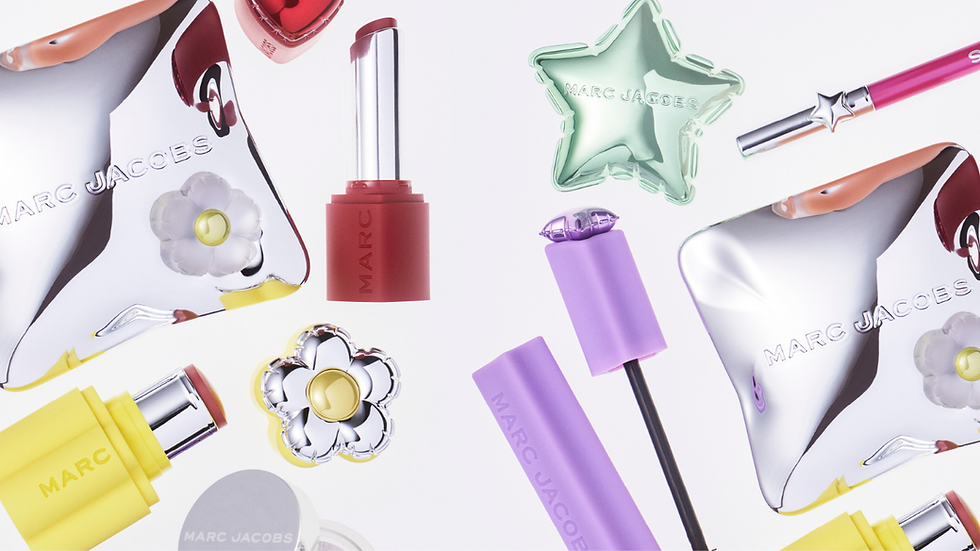
Then you have brands positioned as “premium”—let’s take Marc Jacobs as an example. Fantastic brand. Great design language. Strong identity.
And let’s not forget: Marc Jacobs was the creative director behind some of the most iconic Louis Vuitton collections in history. The man understands luxury at a cellular level. But the brand’s current market behaviour tells a different story. Frequent sales, seasonal promotions, endless outlet drops — that is the fastest way to shift a brand into another psychological category entirely. Once consumers get used to buying your designs at 20–40% off, “not worth full price” becomes the default assumption. And once you train a customer to think that way, reversing it is almost impossible.
3. Beauty: Prestige Plays by Different Rules
In beauty, even expensive brands participate in seasonal promos — but the houses attached to true luxury majors (Dior, Chanel, Tom Ford) still avoid real discounting.
When they want to push volume, they use GWP (Gift With Purchase) instead. A clever tactic: keep price integrity intact while offering something collectible, branded, and desirable. No perception damage, just a little dopamine boost for the customer. Some GWPs even become obsession-level collectables. Which is iconic branding 101.
4. The Controlled Exception: When a Sale Becomes an Event
Every rule has an exception — but in luxury, even the exception has to follow its own strict choreography.
Take the Alexander Wang sample-sale pop-up in New York. If you were in the city that week, you’d have seen it: a queue so long it wrapped around entire blocks, people in oversized sunglasses clutching iced coffees, refreshing their Instagram stories while inching forward centimetre by centimetre.
No banners, no neon SALE signs, no desperation. Just a whispered rumour: “Wang is doing a pop-up.” That was enough.
People waited hours — literally hours — to get into what was essentially a discounted stock sale. And yet nothing about it felt cheap. Why? Because the brand still controlled the narrative.
It was:
a one-off moment,
happening in a separate space,
featuring past-season pieces,
wrapped in exclusivity, not markdown culture.
The scarcity was intact. The hype was intact. And the brand’s prestige remained perfectly untouched. If anything, the event amplified it — you don’t queue for three hours for a brand you don’t respect.
This is the only type of “sale” luxury can get away with: the kind that behaves more like a private event than a price reduction. A rare, tightly curated moment that never spills into boutiques or the official website.
A sale that protects the magic instead of poking holes in it.

The Psychology of Discounting (How the Brain Works)
Here’s the truth: discounts train people.Not once, not occasionally — consistently.
Every time a brand runs a promotion, they’re teaching the customer a behaviour:
“Don’t buy now. Wait. They always go on sale.”
Once that belief settles in, the full price is no longer the “real” price. It becomes the “placeholder price” — the number you temporarily ignore until the inevitable 20–50% drop appears.
And once a brand ends up in that category, climbing back out is nearly impossible.
I’ll give you a very real example from my own life. I haven’t paid full price for H&M or Zara in years. Why would I? I know — from experience — that whatever catches my eye today will be on sale in a few weeks… and occasionally even a few days. Their entire business model has conditioned me to wait. I don’t even see their full price tags anymore. They’re visual noise. That’s the danger.
When this happens in luxury — or even “aspirational luxury” — the damage runs deeper, because luxury relies on a completely different psychology.
Luxury buying is built on:
Urgency (“If I wait, it might be gone.”)
Desire (“I want to be part of this world.”)
Perception (“This is worth the price because the brand stands behind it.”)
Status (“The price is part of the experience.”)
Discounting smashes all four pillars in one blow. If a customer knows your bag, your moisturiser, your coat, your shoes will be discounted next month, the luxury illusion cracks. Not dramatically. Quietly. Slowly. One postponed purchase at a time. One “Let me wait for the sale” at a time.Until eventually, you’re not luxury anymore — you’re a full-price placeholder with a clearance calendar.
Luxury cannot survive that shift. It’s the death of price integrity, and once that’s gone, the brand aura follows.

So, Can Luxury Be On Sale?
Here’s my take — direct, blunt, and from years of watching brands destroy their own value:
Nothing cheapens your brand faster than regular discounts.If you run sales “a few times a year,” you are not operating a luxury brand. You’re operating a premium brand with luxury aspirations.
Frequent sales scream:
“We overpriced this.”
“We can’t move stock.”
“Don’t buy now — wait for the discount.”
You’re essentially teaching your customer to distrust you.
A once-a-year pop-up for old stock? Fine.GWP to boost conversions? Brilliant.Outlet strategy handled with surgical control? Acceptable.
But discounting current-season products in your boutique or online shop? That’s luxury brand suicide.
The Real Cost of Discounting
True luxury isn’t defined by the logo, the celebrity campaigns, or the marble floors in your flagship. It’s defined by discipline— even when it comes to pricing.
Anyone can shout “luxury.” Very few brands can sustain the behaviour that actually makes people believe it. And that’s why discounting matters.Because the moment you start trimming your prices, even with the best intentions, you shift the entire relationship you’ve built with your customer. You stop being the brand they have to save for, aspire to, dream about — and you become the brand they know will blink first.
True luxury doesn’t blink.
So instead of asking, “Can luxury go on sale?” the better question is:What kind of brand do you want to be in your customer’s mind — the one they covet, or the one they wait to see in the sale section?


Comments